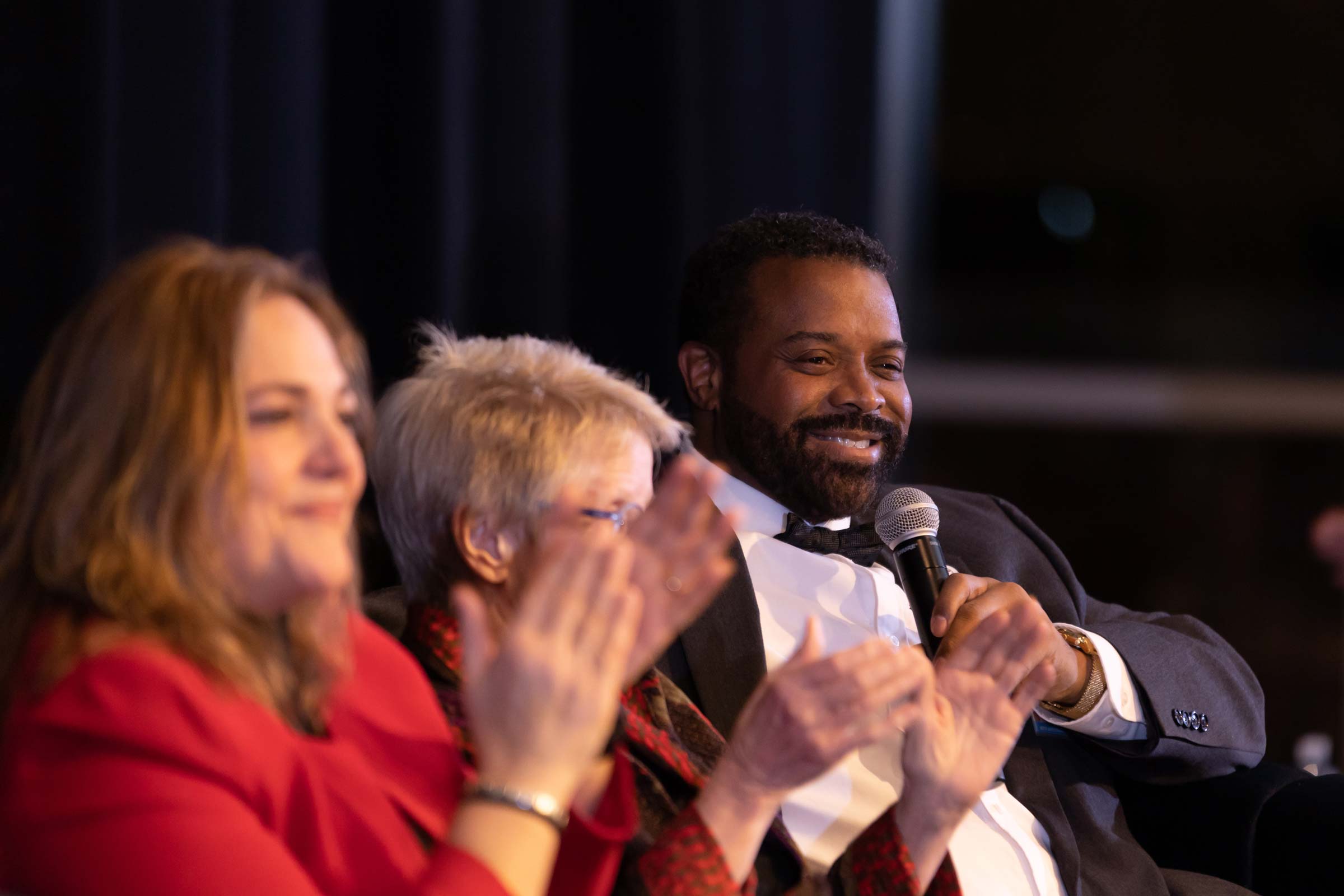
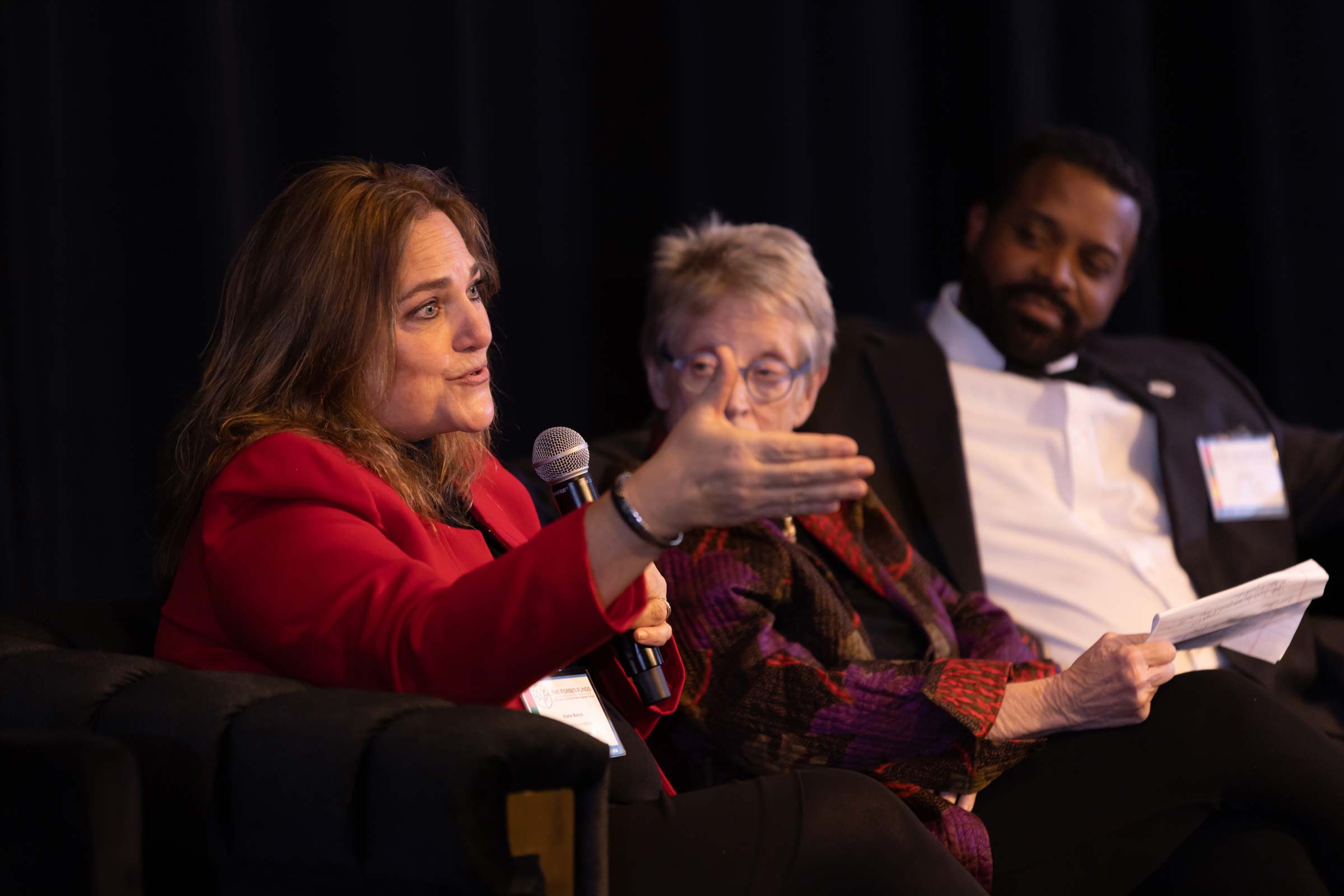
Forbes Funds President Fred Brown, seated with, from left, Buhl Foundation President Diana Bucco and former senior advisor at Dentons Cohen & Grigsby Kate Dewey, addresses a packed Sen. John Heinz History Center ballroom at the Nov. 17, 2022 40th anniversary celebration. This year, Forbes joined The Pittsburgh Promise and Neighborhood Allies to transition from serving the broader mission of The Pittsburgh Foundation as supporting organizations to being independent.
Supporting Transition
Freed from Foundation tethers, three nonprofits prepare to soarOne of the powers of a community foundation is its ability to bring a smaller nonprofit in need of support under its operations umbrella to advance a mission that aligns with its own agenda.
Over the past 42 years, three champions of important causes have been taken in by The Pittsburgh Foundation to make amazing quality-of-life improvements to the region.
The Forbes Funds, The Pittsburgh Promise and Neighborhood Allies fall into the Internal Revenue Service’s Type 1 category, which has required the Foundation to supervise activities and exercise board governance.
Now, after significant planning during the past year, the supporting organization label is being lifted for the three operating organizations — freeing them to be truly themselves.
“When we reviewed their unique contributions to the region and the distinct identities they have forged, we realized they have outgrown the designation,” says Pittsburgh Foundation President and CEO Lisa Schroeder. “It didn’t make sense for us to be managing missions and looking over shoulders.”
The transition began in the summer of 2023, with staffs, boards and outside consultants working to adjust business and operational models in areas ranging from back-office support such as payroll to new workspace.
Pittsburgh Promise Executive Director Saleem Ghubril and Board Chair Anne Lewis announced the transition to board and staff by praising the relationship that had benefited both organizations. “But the time comes for adult children to move out of their parents’ basement,” they wrote tongue-in-cheek. “This process will position us for greater agility, efficiency and impact.”
The Pittsburgh Foundation
Grants to Supporting Organizations



The Promise, which began its supporting role with the Foundation in 2007, has raised more than $176 million for scholarships, sending nearly 12,000 Pittsburgh youth to post-secondary institutions. Over half are students of color; 80% are from low-income households.
Neighborhood Allies, the city-focused economic development and financial empowerment organization, joined the Foundation in 1988 in its previous iteration as the Pittsburgh Partnership for Neighborhood Development.
President and CEO Presley Gillespie says sharing in the Foundation’s credibility and connections has enabled impressive growth — from a $2.1 million annual budget a decade ago to more than $7 million this year. “We’ve received crucial resources, increased our capacity and connected to a wider philanthropic network.” The organization is well positioned, Gillespie says, to achieve within the next decade a North Star goal: moving 100,000 low-income Pittsburghers up the socioeconomic ladder.
Forbes, which became a supporting organization in 1982, provides nonprofits with resources through grantmaking, cohorts and learning forums to enable them to manage disruptions, strategize on operational issues and prepare for the future.
President and CEO Fred Brown says Forbes is pivoting in the transition to transform nonprofit leaders in their ability to handle uncertainty as a result of major events such as COVID. Key to that is equipping them to use artificial intelligence (AI) tools in conjunction with the Entrepreneurial Operating System.
The goals are to promote an entrepreneurial mindset for nonprofit leaders, help them diversify their revenue streams and make them less dependent on grants.
When those changes occur, says Brown, “they will mark not just the end of a chapter, but the beginning of a new era of opportunity and innovation.”

Rob Park, a coach in The Pittsburgh Promise initiative to provide post-secondary exploration and planning for high school students, works with a senior at Cheswick. Pittsburgh Promise officials recognize that the exponential growth in programming and fundraising demonstrates that supporting organization status with The Pittsburgh Foundation is no longer needed.
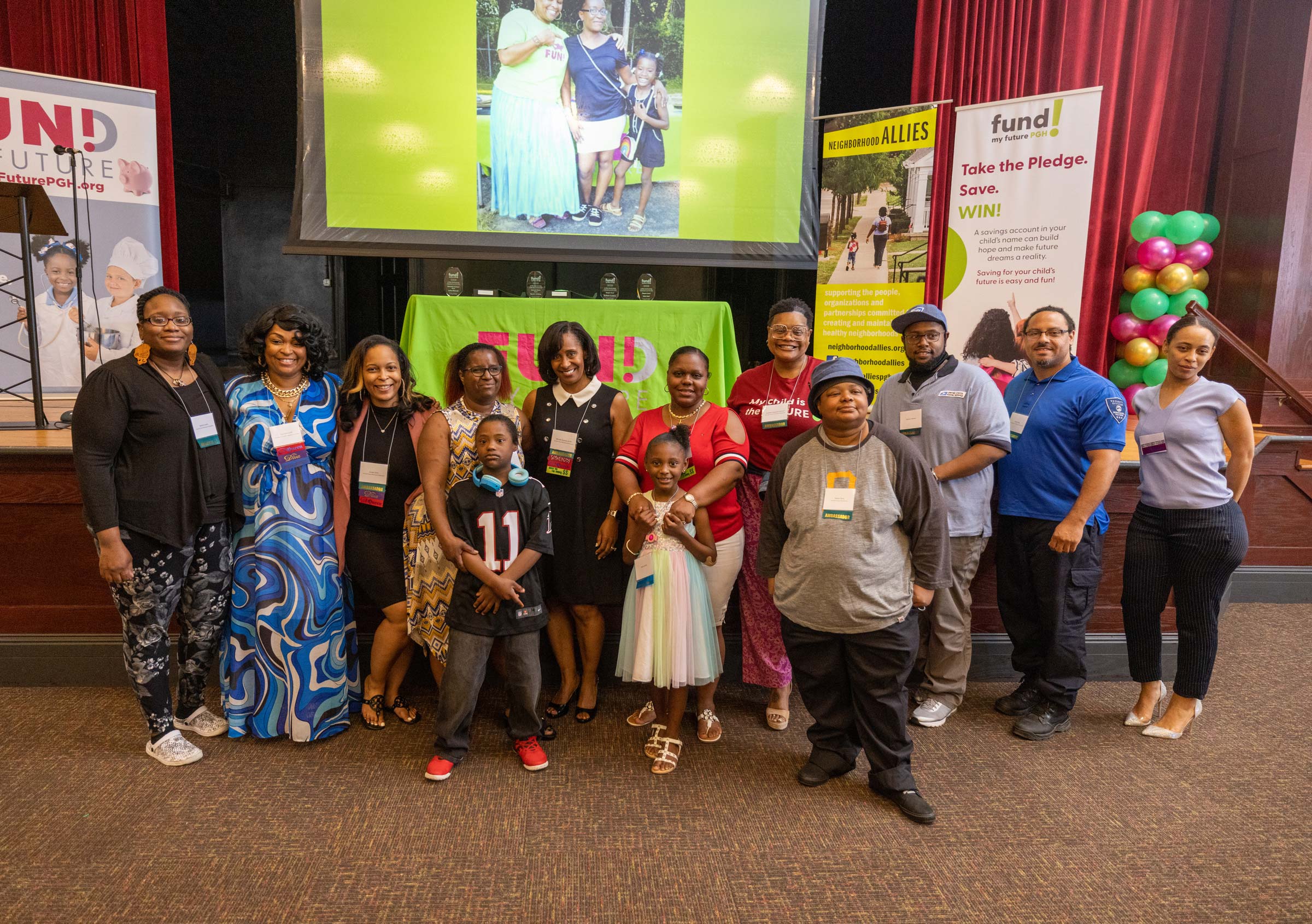
Neighborhood Allies, which became a supporting organization of The Pittsburgh Foundation in 1988 by way of its previous iteration as the Pittsburgh Partnership for Neighborhood Development, has developed powerful programming to reduce generational poverty. One example: the students and parents pictured here celebrating graduation from Fund My Future, a course that helps parents instill in their children the value of saving and managing personal finances.