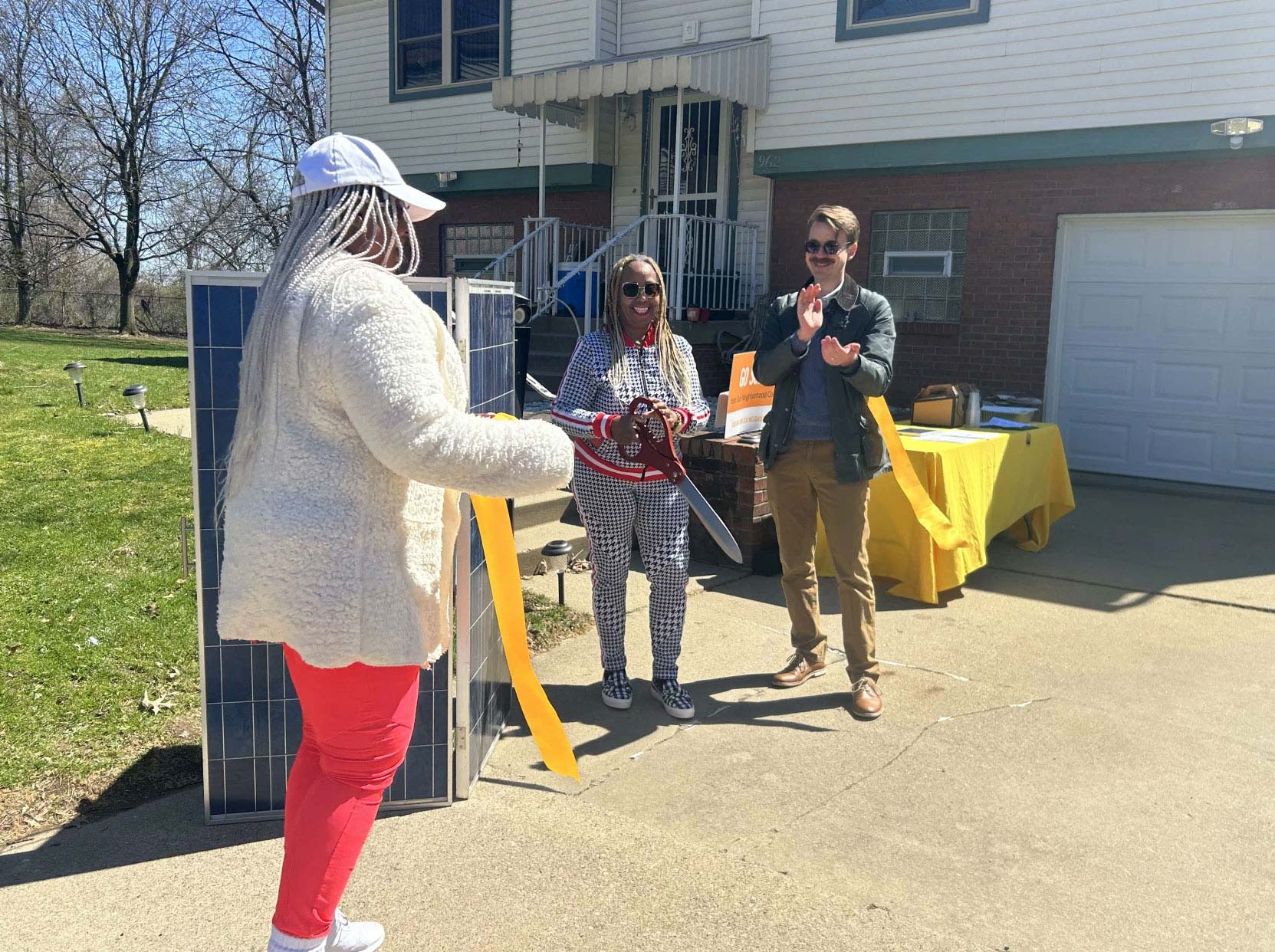
A March 2023 ribbon-cutting of a solar panel home installation in Glen Hazel and Hazelwood by Pittsburgh’s Solar United Neighbors is an example of an impact investment planned by The Pittsburgh Foundation and other funders. A leasing program will enable a similar outfitting of 100 homes in low-income communities, significantly reducing utility costs and carbon footprints.
ROI—Return on Impact
A new Foundation program leverages assets to achieve more social changeThe power of The Pittsburgh Foundation’s assets has historically been demonstrated through the generosity of its donors and direct grantmaking by the institution. Over the Foundation’s nearly 80-year history, supporters’ gifts have enabled it to distribute more than $1.3 billion to improve quality of life across communities.
But in an era of skyrocketing need and the Foundation’s own ambitions to create a more vibrant, equitable and just region, its Board has created an impact investing initiative to direct more of the power of its assets to achieve positive social change.
To do this, the Board established a permanent committee whose members’ main functions will be to approve asset investments, set goals for positive impact for each and monitor progress.
Impact assets are those invested with a particular mission-aligned purpose that may or may not provide market-rate returns.
“Our long-term objective is to achieve meaningful quality-of-life improvements to our communities, and to preserve or recycle capital while achieving a positive real return on loans and investments,” says Amy Marsh, who chairs the Investment Committee and will lead the Impact group.
The Foundation launched the Community Impact Investment Fund with $442,000 — the proceeds from a loan made to an investment project in the early 2000s.
Already, the fund is supporting a leasing program designating 100 homes in low-income communities to be outfitted with solar panels, significantly reducing homeowners’ utility costs and their carbon footprints. The Foundation, together with The Heinz Endowments and the Hillman Family Foundations, is providing lease funding totaling $1.15 million to cover the costs of the leasing program and installations.
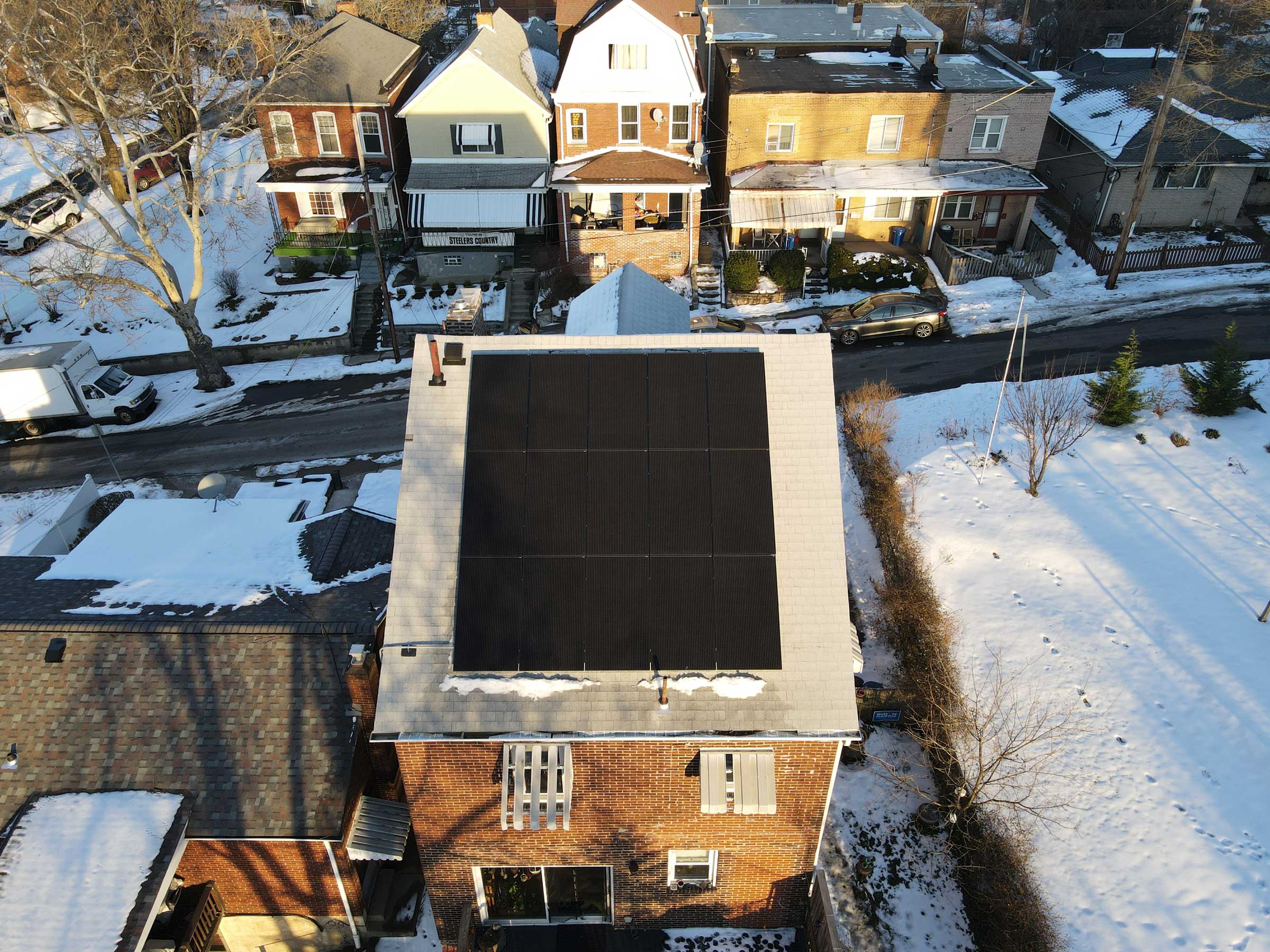
The Pittsburgh Foundation, together with The Heinz Endowments and the Hillman Family Foundations, is providing grants and lease funding totaling $1.15 million to cover solar panel installations in low-income communities. This rooftop panel project was completed by Solar United Neighbors.
Our long-term objective is to achieve meaningful quality-of-life improvements to our communities, and to preserve or recycle capital while achieving a positive real return on loans and investments.
The program will be managed through Pennsylvania BRIGHT, an arm of the national nonprofit Capital Good Fund, a social change organization that uses inclusive financial services to create pathways out of poverty and advance the goal of a green economy.
Another impact investment strategy to make housing more affordable involves the addition of the Jonathan Rose Co. Affordable Housing Fund to the Foundation’s investment portfolio. Rose is a for-profit firm with a history of strong financial returns, but its dedication to increasing affordable housing is driving the Foundation’s investment.
Also benefiting from impact investing is small business development in southwestern Pennsylvania, a priority of the strategic plan.
The Foundation is partnering with the Pittsburgh-based Segal Family Foundation and the Hillman Family Foundations to create a perpetual loan fund for small, disenfranchised entrepreneurs.
Two $50,000 grants, one to Hillman and the other to Segal, will seed the Small Business Investment Fund to provide loans ranging from $5,000 to $15,000 per applicant. The fund will cover 10 to 20 entrepreneurs who have been unable to access loans based on outright discrimination or a range of related factors. The Foundation will use an online lending service to monitor progress of the loan repayment.
While each of these pilot projects will be evaluated for ROI — return on impact — the Foundation has reached a milestone in creating a permanent committee to energize investing for social good. “We know that success at the level we’re striving for in our strategic plan can’t happen through traditional grantmaking alone,” says President and CEO Lisa Schroeder. “We want as much of our investment power as possible aligned with Foundation-directed grants.”