Promoting Democracy
Quiz yourself on your knowledge of voting accessThe Pittsburgh Foundation is supporting nonprofit organizations working to improve democracy.
These organizations are deploying strategies to increase voter participation among groups that historically have been underrepresented at the polls. In southwestern Pennsylvania, this includes young, Latino and Black voters, as well as those with lower median household incomes.
Greater participation in the electoral process creates a more representative democracy, a foundational tenet of the United States. But what exactly are these nonprofits doing to reverse decades of low voter turnout within these populations? This short quiz will give you an idea of some of the statistics, issues and efforts to eliminate barriers to participation.
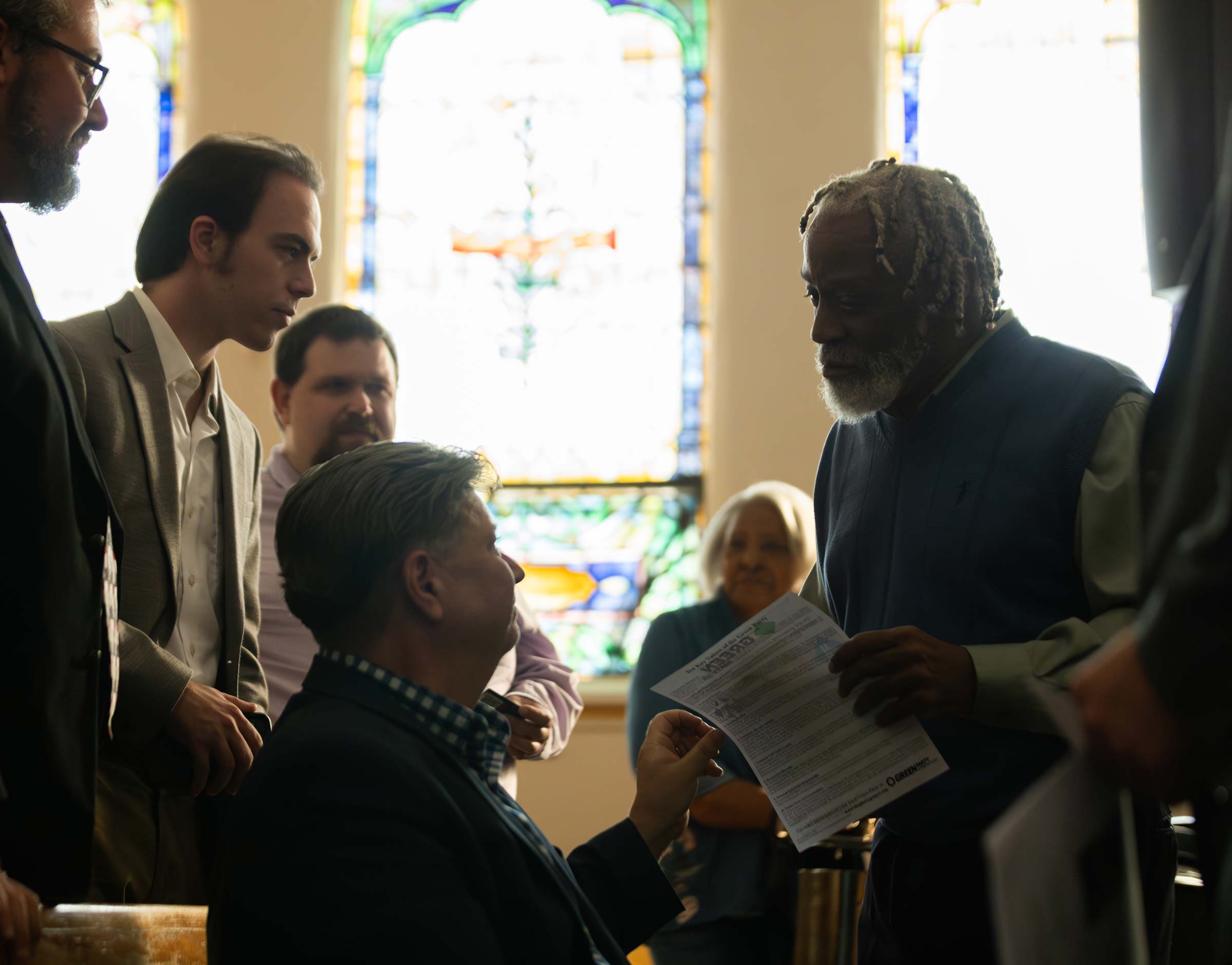
The previous year, Homewood's turnout was 22% lower than the county's. One factor in that difference was Voter Empowerment Education & Enrichment Movement (VEEEM), which began working in Homewood in 2017 to stabilize voter registration and engagement in the Pittsburgh neighborhood where population has been declining precipitously and seemingly inexorably since at least 1950. VEEEM is a faith-based, nonpartisan organization that aims to increase voter participation in several neighborhoods, including Homewood, where turnout rates have been historically low. Decades of targeted voter suppression strategies such as gerrymandering, restrictive voter identification laws and limiting polling places in certain neighborhoods have disenfranchised citizens and established systemic barriers that decrease participation by racial and ethnic minorities in U.S. elections. To inform, empower and maintain engaged voters, VEEEM conducts regular voter registration drives and educates voters on election issues and candidates. It also focuses on building trust in the system by encouraging citizens to vote via mail-in ballots, which any registered Pennsylvania voter may do, and by providing rides to polls for those with mobility challenges.
Historically, voter turnout has been lower in Allegheny County neighborhoods with lower median household incomes and higher minority population density. By educating and engaging the electorate, organizations like VEEEM, the Black Political Empowerment Project, OnePA and the League of Women Voters work towards a more egalitarian process. That is why The Pittsburgh Foundation supports these efforts.
Voter turnout among young people jumped from 14% in 2014 to 32% in the 2022 midterm elections. But two-thirds of young people in Pennsylvania still aren't voting. Because that lagging engagement is long-standing, candidates tend to overlook young people. To increase young voter turnout, organizations like PA Youth Vote are broadening young people’s engagement in the electoral process through tactics that connect students to candidates and issues. Over the past several years, PA Youth Vote successfully launched pilot programming in Philadelphia. Now, with support from The Pittsburgh Foundation, PA Youth Vote is extending those programs to Pittsburgh. The organization primarily serves Black, Asian and Latino youth, particularly in oppressed communities of color.
The Voting Rights Act stipulates that counties must offer foreign language voting information and assistance when more than 10,000 county citizens or more than 5% of the total voting age citizens are members of a single language minority group and have depressed literacy rates. While the Hispanic population in Pennsylvania is among the fastest growing in the country, it’s not high enough in all counties to require language assistance under the law. In Allegheny County, though, non-profit organizations like Casa San Jose work to identify eligible Latino citizens and assist them in registering to vote and with language translation at the polls. In addition, Casa San Jose, an organization that The Pittsburgh Foundation has long supported, educates voters on issues specific to Latino and BIPOC communities. Increasing participation among non-English speaking citizens creates a more equitable, representative democracy.
Combining this type of issues-based information, in this case on reproductive justice and health care, with political education helps to engage communities in elections. For example, reproductive justice, health care and bodily autonomy are critical issues for Black women. who bear more than one marginalized identity. New Voices for Reproductive Justice, a Foundation-supported organization headquartered in Pittsburgh that aims to support and build power with Black women, Black queer folks and Black marginalized people, provides information about reproductive choice and freedom to Black women throughout southwestern Pennsylvania. The organization works through its voter engagement program to equip eligible Black voters with information on bodily autonomy and reproductive rights to ensure Black voters understand the stakes of elections and make informed decisions at the ballot box.